The world of artificial intelligence has evolved far beyond simple chatbots and search assistants. Today, AI platforms are entering entertainment, storytelling, roleplay, and even adult-themed communication. One term that has started gaining attention online is SmutGPT. While the name itself sounds playful and provocative, it reflects a growing trend where AI tools are used for fictional storytelling, character interactions, romantic dialogue, and personalized conversational experiences.
The popularity of AI-generated content has exploded in recent years. From writers using AI for brainstorming to gamers building immersive roleplay experiences, conversational AI has become deeply integrated into internet culture. SmutGPT represents a niche but rapidly expanding category focused on mature storytelling and interactive fantasy conversations.
What makes this trend fascinating is that it combines several modern internet behaviors into one experience. People enjoy personalization, instant interaction, creative freedom, and immersive entertainment. AI systems designed for mature or romantic storytelling attempt to provide all of those things in a single platform. As a result, SmutGPT has become a keyword people search for out of curiosity, entertainment, and creative exploration.
In this article, we will explore what SmutGPT means, why it has become popular, how AI-generated adult storytelling works, the technology behind it, ethical concerns, creative applications, and the future of conversational AI in mature entertainment spaces.
What Is SmutGPT?
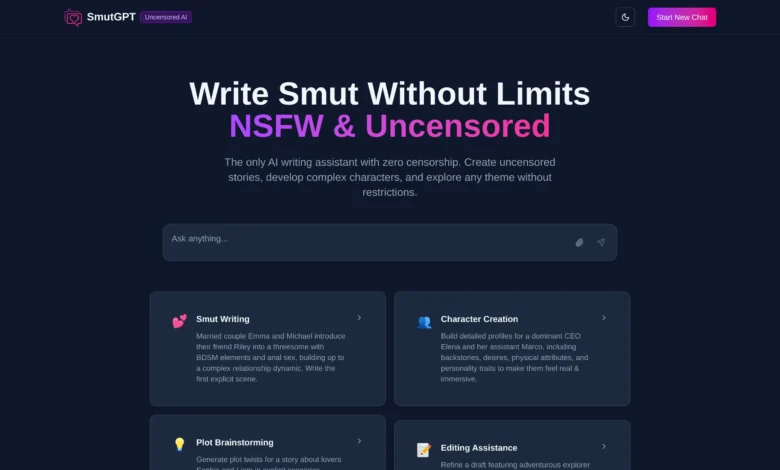
At its core, SmutGPT refers to an AI chatbot or conversational platform designed for adult-themed interactions, romantic storytelling, or fictional roleplay. The term combines the word “smut,” commonly associated with mature fiction or erotic storytelling, with “GPT,” which refers to generative pre-trained transformer technology used in modern AI systems.
Unlike traditional adult content websites that rely heavily on static videos or images, SmutGPT-style platforms focus on interactive experiences. Instead of passively consuming content, users participate in conversations, shape narratives, and create fictional scenarios in real time. That interactive element is one of the biggest reasons why these tools have gained popularity.
Many users are not necessarily looking for explicit material alone. Some people enjoy the storytelling aspect, while others are interested in fantasy roleplay, emotional dialogue, or experimenting with fictional character personalities. The appeal often lies in the customization and responsiveness of AI-generated interactions.
Another important aspect is accessibility. AI chat platforms are available 24/7, respond instantly, and can adapt to different tones or themes. For many users, this creates a highly personalized entertainment experience compared to traditional forms of digital content.
Why SmutGPT Has Become So Popular
The rise of SmutGPT is closely connected to broader internet and AI trends. People increasingly prefer personalized digital experiences over static media. Whether it is TikTok algorithms, Netflix recommendations, or AI companions, modern technology is moving toward customization.
One reason for SmutGPT’s popularity is curiosity. AI technology still feels futuristic to many users, and people naturally want to test its limits. Adult-themed conversation tools quickly became a popular experiment because they combine entertainment with interactivity. Users often explore these platforms simply to see how realistic or creative the AI can become.
Another major factor is creative freedom. Traditional storytelling formats usually follow a fixed structure. With AI conversation tools, users can guide the direction of a story themselves. They can create characters, settings, personalities, and dialogue styles that match their preferences. This level of control feels unique and immersive.
Social isolation and digital companionship also play a role. Some users enjoy AI conversations because they provide instant engagement without social pressure. While AI cannot replace genuine human relationships, conversational platforms can offer entertainment, escapism, and imaginative interaction for users seeking casual digital experiences.
The viral nature of internet culture has also contributed significantly. Platforms discussed on Reddit, TikTok, YouTube, and online forums often gain traction rapidly. Once people began sharing screenshots, memes, and experiences involving AI roleplay conversations, interest in SmutGPT-related platforms increased dramatically.
How AI-Powered Adult Storytelling Works
To understand SmutGPT properly, it helps to understand the technology behind conversational AI. Modern AI chat systems are typically based on large language models trained on enormous amounts of text data. These systems learn patterns in language, sentence structure, context, and conversation flow.
When a user types a message, the AI predicts and generates a response based on the context of the conversation. The system does not “think” like a human being. Instead, it uses probability and language modeling to create responses that appear natural and engaging.
In adult storytelling or roleplay systems, developers often fine-tune the AI to handle emotional dialogue, fictional scenarios, character consistency, and immersive narrative structure. Some platforms allow users to customize personality traits, relationship dynamics, or conversation themes to create more engaging experiences.
Another interesting feature is memory simulation. Certain AI systems attempt to remember past details from conversations, making interactions feel more continuous and realistic. This creates the illusion of personality development and deeper interaction over time.
The technology can also generate descriptive scenes, emotional tension, romantic dialogue, and fictional storytelling structures. In many ways, SmutGPT platforms function like collaborative storytelling engines where both the user and AI contribute to the unfolding narrative.
The Difference Between Traditional Adult Content and SmutGPT
One of the biggest differences between SmutGPT and traditional adult entertainment is interactivity. Traditional adult media is mostly passive. Users watch or read pre-created material without influencing the outcome.
SmutGPT changes that dynamic completely. Users become active participants in the experience. They can shape the tone, pacing, personalities, and direction of conversations. This interactive element creates a sense of immersion that traditional formats cannot easily replicate.
Another difference is emotional engagement. Many AI conversation systems emphasize dialogue, emotional tension, and character interaction rather than purely visual stimulation. Some users find storytelling-driven experiences more engaging because they feel personal and customized.
Privacy is another factor influencing popularity. AI chat interactions are often private and individualized, which appeals to users who prefer discreet entertainment experiences. Instead of browsing public content, users interact directly with a conversational system tailored to their interests.
There is also a strong creative component involved. Writers and roleplay enthusiasts sometimes use AI systems to brainstorm stories, test character dialogue, or explore fictional scenarios. In this sense, SmutGPT is not only about entertainment but also about collaborative creativity.
The Role of AI Companions and Virtual Characters
AI companion culture has grown rapidly in recent years. Virtual assistants are no longer limited to productivity tasks. Many people now use conversational AI for emotional interaction, casual chatting, and companionship-like experiences.
SmutGPT-style platforms often include customizable virtual characters. Users may select personality types such as confident, playful, mysterious, romantic, or supportive. This customization helps create unique interactions that feel more immersive.
Some platforms even allow detailed character creation, including fictional backstories, appearance descriptions, and behavioral traits. This mirrors trends seen in gaming, anime fandoms, and roleplay communities where character-driven storytelling is highly popular.
The psychological appeal is rooted in personalization. Humans naturally respond to conversational engagement and emotional feedback. Even when users understand they are interacting with AI, the conversational realism can still feel entertaining and emotionally compelling.
However, it is important to remember that AI companions are ultimately software systems, not real emotional beings. While they can simulate empathy and conversation effectively, they do not possess genuine consciousness or human understanding.
Ethical Questions Surrounding SmutGPT
As with many forms of emerging technology, SmutGPT raises important ethical discussions. One concern involves emotional dependency. Some experts worry that highly personalized AI companions could encourage unhealthy attachment or excessive isolation from real-world relationships.
Privacy is another significant issue. AI platforms often collect user data, conversation history, and behavioral patterns. Users should always be cautious about sharing sensitive personal information with online systems, especially platforms that may lack transparent privacy policies.
Content moderation is also a major challenge. Developers must establish clear boundaries regarding harmful, abusive, or illegal content. Responsible AI systems typically implement safeguards designed to prevent dangerous or exploitative interactions.
There are also broader debates about the social impact of AI-generated intimacy and entertainment. Some critics argue that AI companionship may distort expectations around communication and relationships, while others believe it simply represents another form of digital entertainment.
These conversations are likely to continue as conversational AI becomes more advanced and integrated into everyday life. Like social media and online gaming before it, AI companionship technology is reshaping how people interact with digital experiences.
The Creative Side of SmutGPT
Although much attention focuses on adult themes, SmutGPT also highlights the growing role of AI in creative writing. Many users experiment with storytelling prompts, fantasy worlds, dialogue practice, and character-driven narratives.
Writers often struggle with issues like writer’s block, pacing, or dialogue realism. AI tools can help generate ideas, explore alternate story directions, or create spontaneous interactions between fictional characters. This collaborative aspect has become surprisingly valuable for creative communities.
Roleplay communities have particularly embraced AI storytelling systems. Fans of fantasy, science fiction, romance, and gaming often use conversational AI to simulate interactive adventures. The mature-content angle is only one part of a much larger storytelling ecosystem.
The technology also demonstrates how AI is changing entertainment itself. Instead of consuming finished content, users increasingly participate in dynamic experiences generated in real time. This shift toward interactive entertainment may become one of the defining digital trends of the decade.
In many ways, SmutGPT represents a fusion of gaming, storytelling, roleplay, and conversational AI. Its popularity reflects changing expectations around personalization and interactive media.
Potential Risks and Limitations
Despite its popularity, SmutGPT-style technology still has clear limitations. AI systems can generate repetitive responses, misunderstand context, or produce unrealistic dialogue. Even advanced models occasionally lose conversational consistency during long interactions.
Another issue involves misinformation or emotional manipulation. Since AI generates responses based on patterns rather than understanding, it can sometimes produce misleading or problematic content if not carefully moderated.
Addiction-like behavior is another concern discussed by researchers. Because AI interactions are instant, personalized, and always available, some users may spend excessive amounts of time engaging with virtual conversations instead of balancing real-world activities.
There is also the challenge of unrealistic expectations. AI-generated personalities can appear endlessly attentive, agreeable, and customizable. Real human relationships are naturally more complex, unpredictable, and emotionally nuanced.
Technical limitations remain important as well. Even the most sophisticated AI models lack genuine emotion, consciousness, and human intuition. They simulate conversation effectively but do not truly experience feelings or relationships.
The Future of SmutGPT and AI Entertainment
The future of conversational AI entertainment looks incredibly expansive. As AI systems improve, interactions will likely become more realistic, emotionally responsive, and context-aware. Voice integration, virtual reality, and animated avatars may eventually create fully immersive AI companion experiences.
We are already seeing AI integrated into gaming, streaming, and social platforms. Future systems could blend storytelling, visual generation, voice synthesis, and emotional simulation into a single entertainment environment.
At the same time, regulation and ethical oversight will become increasingly important. Governments, developers, and technology companies will need to address concerns around privacy, consent, moderation, and responsible AI use.
Another likely development is increased specialization. Instead of one-size-fits-all chatbots, future AI systems may focus on niche communities, storytelling genres, and customized interaction styles. SmutGPT is an example of how AI platforms evolve around specific user interests.
What remains clear is that conversational AI is transforming digital culture. Whether used for entertainment, creativity, companionship, or storytelling, AI interaction has become a major part of the modern internet experience.
Conclusion
SmutGPT represents more than just a viral internet keyword. It reflects the growing intersection between artificial intelligence, entertainment, storytelling, and personalized digital interaction. As conversational AI technology advances, users are increasingly drawn toward experiences that feel immersive, responsive, and uniquely tailored to their interests.
The popularity of SmutGPT highlights how internet culture continues to evolve alongside AI innovation. People no longer want only static content; they want participation, customization, and dynamic interaction. AI-powered storytelling platforms deliver exactly that.
At the same time, this growing trend raises important conversations about ethics, privacy, emotional dependency, and the future of digital relationships. Like many emerging technologies, conversational AI offers both exciting opportunities and meaningful challenges.
Whether viewed as entertainment, creative experimentation, or a glimpse into the future of digital companionship, SmutGPT demonstrates how rapidly AI is reshaping online experiences. As technology continues to improve, interactive AI conversations will likely become even more sophisticated, personalized, and integrated into everyday internet culture.